
China Gut Motility Program (CGMP) Consortium Progress Meeting Held in Wuxi
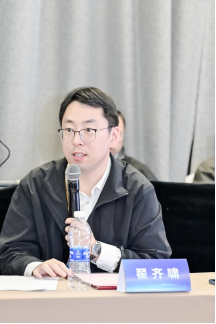
On the afternoon of November 8, 2026, the China Gut Motility Program (CGMP) Consortium Progress Meeting was held in Wuxi, Jiangsu Province. The meeting was chaired by Zhai Qixiao, Vice Dean of the School of Food Science and Technology at Jiangnan University and Executive Deputy Director of the State Key Laboratory of Food Science and Resources. Chen Wei, an academician of the Chinese Academy of Engineering, President of China Agricultural University, and initiator and Chief Scientist of CGMP, attended the meeting.The meeting brought together 20 experts from Shanghai Tenth People’s Hospital, West China Hospital of Sichuan University, the General Hospital of the Eastern Theater Command of the Chinese People’s Liberation Army, Jiangsu Province Hospital, Suzhou Municipal Hospital, Shengjing Hospital of China Medical University, Liangjiang Hospital Affiliated with Southeast University, Zhengzhou Colorectal and Anal Hospital, the Affiliated Hospital of Jiangnan University, the Affiliated Central Hospital of Jiangnan University, Nanjing University, Southeast University, Nankai University, Nanjing Medical University, and Shenyang Agricultural University
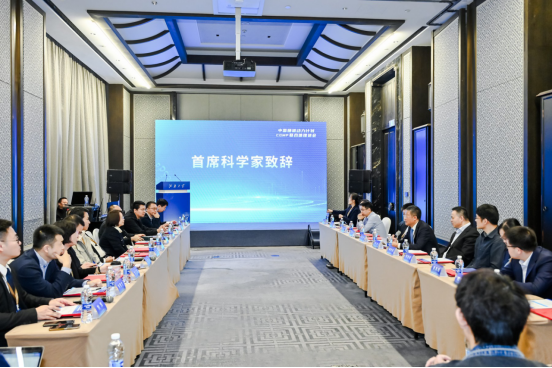
In his address, Academician Chen Wei reviewed the progress of CGMP since its launch. He emphasized that the next phase should build on existing cohort studies and gut microbiota classification research to comprehensively elucidate the scientific basis of probiotics that regulate gut motility and translate research findings into clinical practice, providing strong support for basic research and industry development in related fields.
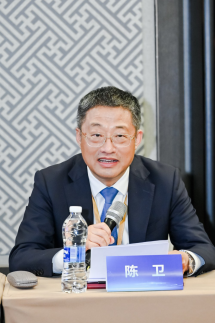
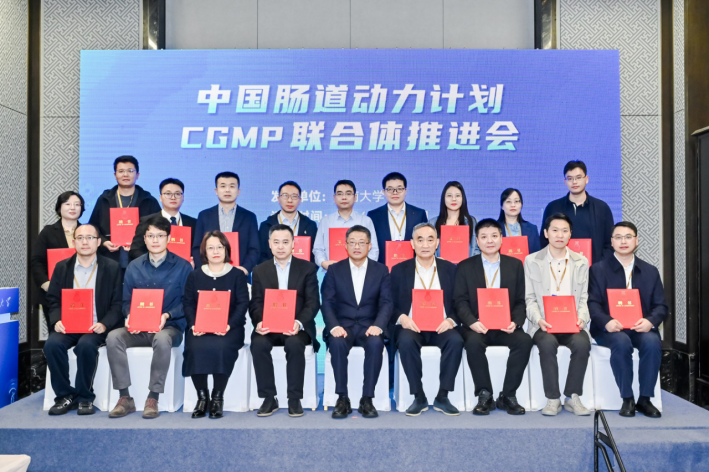
Following his address, Academician Chen Wei presented letters of appointment to experts from CGMP partner institutions and joined them for a group photo.
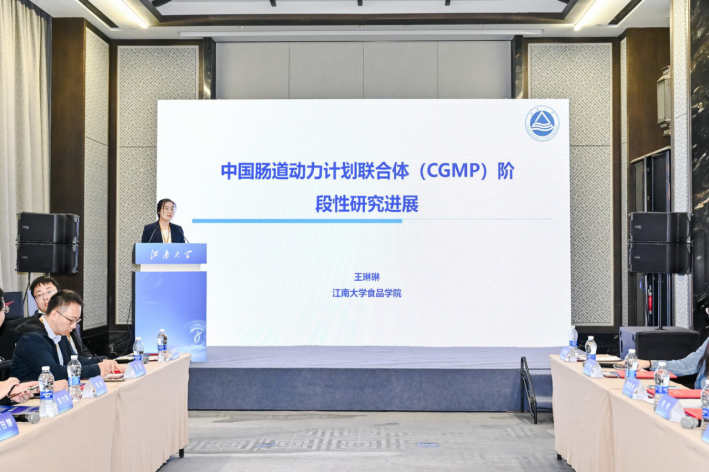
Wang Linlin, a research fellow at the School of Food Science and Technology at Jiangnan University, then presented an update on CGMP’s progress. The program has established a multicenter, prospective cohort of more than 2,000 participants with constipation. Using cohort data, the research team identified two constipation subtypes based on gut microbiota profiles and developed a predictive model. Next, the team will develop clinical and dietary intervention strategies tailored to the microbiota characteristics of these two subtypes and advance their clinical validation
uring the thematic discussion, participating experts exchanged views in depth on the division of responsibilities among collaborating centers and pathways for translating research findings into clinical practice. The expert panel recommended further refining standards for recording patient data and symptoms to provide more rigorous data support for subtype validation. They also emphasized the need to clearly define the target populations for different interventions to facilitate broader clinical adoption. In addition, participants discussed the feasibility of translating research findings into diagnostic and treatment tools for primary care and the need to develop a national expert consensus.
In his closing remarks, Academician Chen Wei emphasized that the core value of CGMP lies in addressing patients’ practical clinical needs. He outlined three priorities: first, the consortium should refine its study protocols in strict accordance with clinical research standards and ensure that the existing cohort is sufficiently large to support subsequent research; second, all collaborating centers should work closely together to accelerate research progress; and third, the team should continue to use gut microbiota subtyping to guide and accelerate the development of interventions and products, validating their clinical utility through rigorous clinical studies.